
 New Delhi


Why New Websites Struggle to Rank and What Actually Works in 2021
A website must be designed in a proper way to have useful and keyword-enriched content, but it does not mean that the website will get a chance to be displayed on the first page of Google SERP. Some websites take many years before getting to the top of search engine results pages (SERPs). It seems that the fact that new websites struggle to rank is obvious.
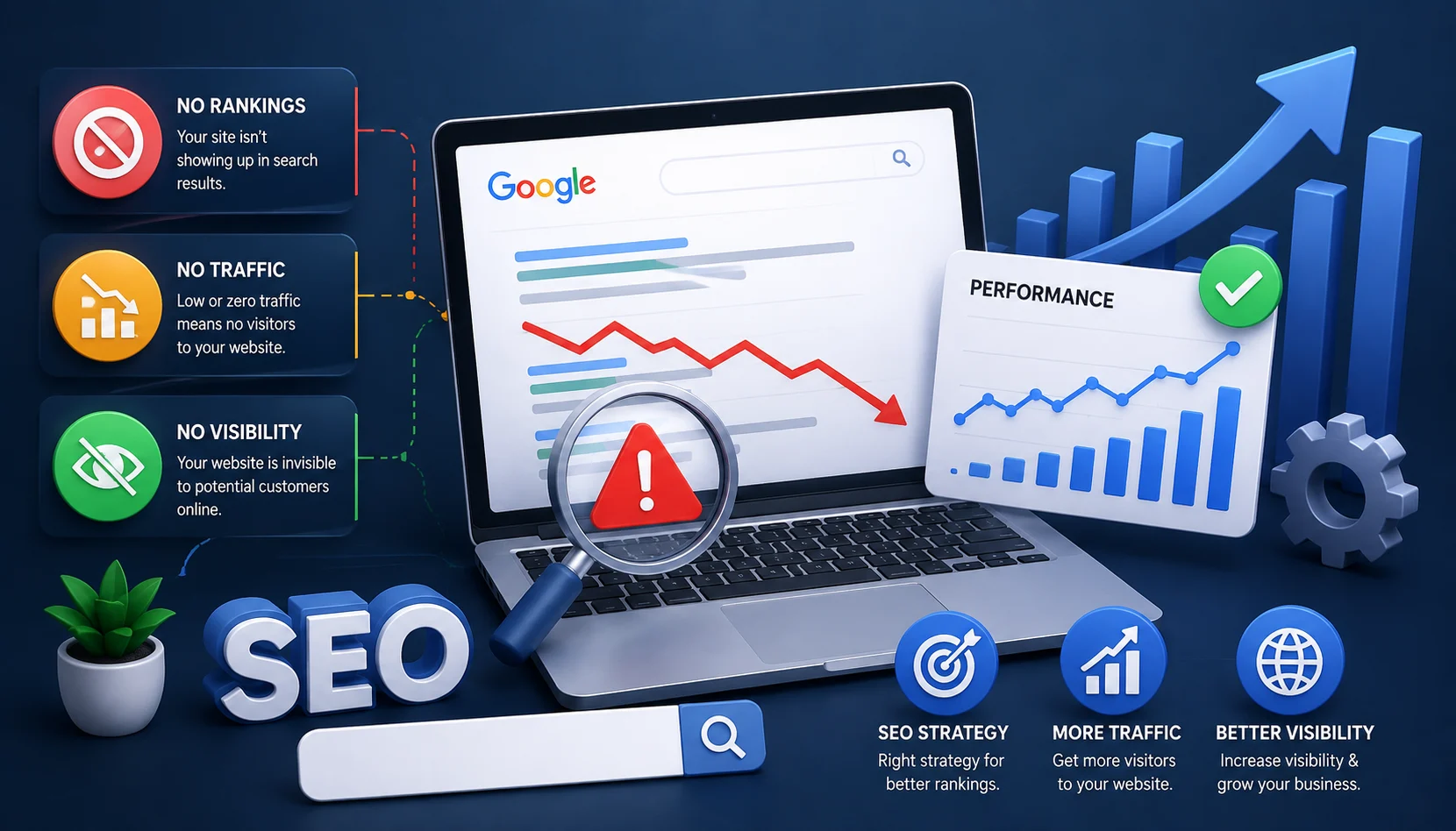
Google does not put new websites on the first page of SERPs just because they are new or include relevant keywords.
Search engines employ more than 200 algorithms in order to make sure that only the most relevant, informative, safe, and easily accessible webpages will be displayed on the first page of the results list.
So, Why Do New Websites Struggle to Rank?
They have a lower chance of appearing in search results due to the lack of:
search history
brand strength
content volume
referring domains
topical authority
While new websites suffer from these disadvantages, their strongest competitors already have websites with rich content, an established audience, and backlinks from other sites.
Moreover, for some queries, new websites must compete with highly relevant, popular webpages.
Google indexes webpages quickly, but it does not mean that they will appear on the first page of Google Search. Thus, to compete with similar results, new websites need to appear higher in the SERPs.
Now, let us take a closer look at what new websites should do to rank well in search results.
Technical Aspects Should Be Prioritized
Websites should have technical SEO optimized so that they can be crawled and indexed by search engines.
A new website should first fix technical issues before optimizing backlinks and publishing articles. A website owner should pay attention to:
mobile-friendliness
speed
SSL certificate
XML sitemap
robots.txt
URL structure
canonical tags
redirects
internal links
image optimization
indexing
With Google Search Console, one can see whether a website is indexed and what problems it has. A technically sound website is not guaranteed to appear on the first page of Google SERP, but a technically broken website is highly unlikely to do so.
Selecting the Right Keywords for SEO
When choosing keywords for a new website, many people make a mistake of selecting only keywords with a high search volume.
If a website is new, one should think about what one wants to rank for, analyze competitive websites, and select keywords with a reasonable search volume. Instead of targeting overly competitive terms, it is a good idea to choose longer-tail keywords.
For instance, instead of targeting the keyword SEO services, one can use the phrase SEO services for small businesses. One can also use location- and question-based modifiers:
SEO services in Delhi
How does technical SEO affect rankings?
Avoiding keywords with low competition and high difficulty is also an essential SEO tip for new websites.
Understanding Search Intent
User intent refers to why a searcher is looking for a specific query.
There are four types of search intent:
Informational – looking for a resource or answer.
Navigational—looking for a specific website.
Commercial Investigation—comparing products and services.
Transactional – trying to make a purchase or fill out a form.
A website’s content should be relevant to the search intent of its audience. For instance, if users are searching for how to fix a slow website, Google will prioritize informative content over transactional resources. Therefore, if a web development company wants to rank for this query, it should first focus on publishing educational content that answers users’ questions and solves their problems. The website should address user intent so that users can benefit from it.
Before publishing articles, it is essential to research the search intent and analyze what content Google returns for specific queries.
Build Topic Authority
New websites should not try to publish irrelevant articles just to fill up their site with content. Instead, they need to focus on creating relevant content about their niche and topic areas. For instance, if a website is about SEO services, it should have a web page about SEO services and related subjects:
keyword research
technical SEO
local SEO
on-page SEO
SEO internal linking
SEO content
Google Search Console
SEO reports
website speed
structured data
Such websites can interlink their content to make it easier for search engines to find relevant information and to provide users with more data. In this way, a website can build topical authority and help search engines understand what the website is about.
Create Useful Content
Apart from publishing articles, new websites should focus on creating useful content. New sites should not just repeat the same information as other websites. They should explain things better, give more examples, make recommendations, compare things, share statistics, show data, give screenshots, and solve more problems than their competitors. New websites rarely succeed because they try to rewrite the same information that other websites have.
Instead of writing articles about SEO, new websites can explain how to fix indexing errors, optimize a website according to Google guidelines, analyze internal linking, and study SEO reports. The point is to come up with solutions to specific problems and address the needs of one’s audience.
Internal Linking Should Not Be Overlooked
Websites with similar content should interlink to help search engines organize information better and provide users with more data.
For instance, articles about keyword research can link to a more general article about SEO, while an article about SEO can link to other pieces of content related to the topic.
Internal linking is also essential for larger websites with hundreds or even thousands of webpages. Users may experience difficulties navigating such sites if they do not use internal links.
However, internal linking should not be used in every article since it may make them irrelevant. Only contextual internal linking should be used in articles, and it should be done wisely.
Quality Backlinks Help to Increase Authority
The more high-quality websites that link to a website, the more credible and popular it becomes in the eyes of Google. New websites should build backlinks from high-authority domains. New websites should avoid cheap and low-quality methods such as buying links from spammy websites since it can harm their authority. A new website can get quality backlinks by providing more information, statistics, and data, publishing guest posts, and collaborating.
Your Content Should Deliver an Excellent User Experience
Many new websites try to attract more traffic by any means, but they forget about the user experience (UX) and usability of their website. It is essential to optimize websites so that they are easy to navigate, fast, mobile-friendly, and visually appealing. Having a great website design is important, but it is not enough. A website should be optimized by organizing information with subheadings and paragraphs so that it is easy to read and scan. Doing so will also make it easier for search engines to read and index such websites.
New websites should be optimized for scanning so that mobile users can read their content without straining their eyes. Many users use the internet primarily on smartphones. A responsive design is essential because a website that looks great on a desktop can appear broken on a mobile device. Images and videos should also be optimized since they take up a lot of space and can slow down a website. Google recommends mobile-friendly websites, so it is a good idea to make sure the website is optimized for mobile users.
Be Patient and Monitor Progress
SEO is a long-term game, and new websites should not expect to appear on the first page of Google right after launching. Even if all of the above SEO tips helped to optimize a new website, it may take a lot of time before it starts to appear in Google search results. New websites should track organic impressions, clicks, keywords, indexed pages, organic traffic, engagement, and conversions. Monitoring impressions is a good idea since it shows how much traffic Google sends to a website. New websites may have low impressions and clicks since they have just launched, but impressions will increase over time. Clicks will also increase when a website has more traffic and content.
What Actually Helps New Websites to Rank?
There is no ultimate answer to this question since every website is different. However, multiple SEO strategies should be used to help new websites rank well. New websites should pay attention to technical aspects, search intent, keywords, content, topical authority, internal linking, backlinks, and user experience. The eight points above are essential for new websites, and they are intertwined, meaning that one thing affects the others. For instance, useful content can be promoted, and promotion can increase topical authority, and topical authority, along with useful content, can improve the UX.
Final Notes
There are several reasons why the new websites may fail to rank. The search engines need to get familiar with these new websites so as to be able to give them a place among the well-known websites on the first page of the SERP. A new website needs to provide a very good user experience, be SEO friendly, and use relevant keywords in order to rank on search engines. This means that these websites need to promote themselves naturally without spamming and create useful content for the users.


Comments (0)
No comments yet. Be the first to comment!